Every sign posted along A1A says sea turtle season runs from March through October. What the sign does not say is that if you want to actually witness any of it, from a nest being dug to a hatchling scrambling toward the water, your window is a lot narrower than seven months. For anyone in Dakota Delray who has noticed new wooden stakes and orange flagging tape appearing on the beach during a normal evening walk this summer, the season is not just underway. It is already closing.
The City of Delray Beach's own conservation program confirms the timing: nesting runs March 1 through October 31, but the peak of the season falls in the late summer months of July and August, which means right now is as active as this stretch of coastline gets. The catch is that most of what makes the season visible to residents, rather than just present in the sand, wraps up well before Halloween.
The Stakes Showing Up on Your Regular Walk
If you walk the beach near Anchor Park or Atlantic Dunes in the early morning, you are walking the same route city staff cover before sunrise. Delray Beach performs daily turtle nest surveys starting just before sunrise, reading the tracks left overnight to figure out which species came ashore and whether it actually nested. Every confirmed nest gets marked with stakes and flagging tape on the spot, which is why that quiet corner of beach you passed last week now has a small taped-off square that wasn't there before.
Not every track belongs to the same turtle. Loggerheads are the ones you are most likely to encounter, but they are not the first to arrive each year. That distinction goes to leatherbacks, which typically start nesting as early as March. Nests had already been reported in Delray Beach by early March 2026, weeks before most residents start thinking about turtle season at all.
| Species | How often it shows up on Delray's beaches |
|---|---|
| Loggerhead | Most common nester on Delray's beaches |
| Green | Regular, second most common |
| Leatherback | First to nest each year, typically arriving by March |
| Hawksbill, Kemp's Ridley | Occasional, less frequent |
That ranking, loggerhead first, green second, leatherback earliest, hawksbill and Kemp's Ridley occasional, comes directly from the city's own program page, not a general Florida overview. It is specific to this beach.
What the County Number Actually Means for This Stretch of Sand
Palm Beach County was recognized this spring for a nation-topping figure: roughly 2 million hatchlings born here each year, the vast majority of them loggerheads. In 2025, the county led the entire state with 25,614 tracked loggerhead nests, according to Florida Fish and Wildlife Conservation Commission data cited in that same reporting.
Concentrate that many nests along a county with a limited number of miles of nesting beach, and the odds shift. A stretch of shoreline that might feel unremarkable on an evening walk is statistically one of the more active nesting corridors in the country right now. As one Boca magazine writer put it this summer, "sea turtles tend to return every summer to the same spots, like snowbirds in reverse." Delray's beach is one of those spots.
The Program That Already Closed, and the One Still Open
Here is where the calendar gets specific in a way most general write-ups skip. Just up the coast in Boca Raton, Gumbo Limbo Nature Center runs the region's most established public turtle walk, the guided evening program where a scout searches the beach for a nesting loggerhead and leads a small group out to watch. For 2026, that program's schedule ended July 2. If you were planning to book one this month, that door is already shut for the year.
What is still open, for now, is the hatchling release program. Gumbo Limbo is running select hatchling release dates from July 13 through August 27, 2026, where participants watch newborn turtles scurry into the ocean for the first time. From today's date, that leaves roughly two and a half weeks before this year's public viewing calendar closes entirely.
Closer to home, the Sandoway Discovery Center on South Ocean Boulevard in Delray Beach offers a quieter, year-round alternative. Housed in a historic beachfront home from the 1930s, the center dedicates a room to Florida's nocturnal wildlife, including sea turtle nesting, alongside its reptile exhibits and shell collection. It will not put you on the sand at midnight, but it is open long after the seasonal programs wind down, which makes it worth a stop even in the quieter months ahead.
The Nightly Routine That Isn't Just a Suggestion
If your evening walk takes you past beachfront properties, you may have noticed porch lights that seem dimmer than usual, or curtains drawn earlier than expected. That is not incidental. Delray Beach adopted Ordinance 11-14 in May 2014, setting requirements for new and existing beachfront lighting, and Code Enforcement staff actively inspect for compliance. Anyone who spots a likely violation can report it directly to Code Enforcement at 561-243-7219.
The rules that apply to beachfront property owners each night include:
- Moving chairs, cabanas, and any portable items to the foot of the dune so turtles can move freely
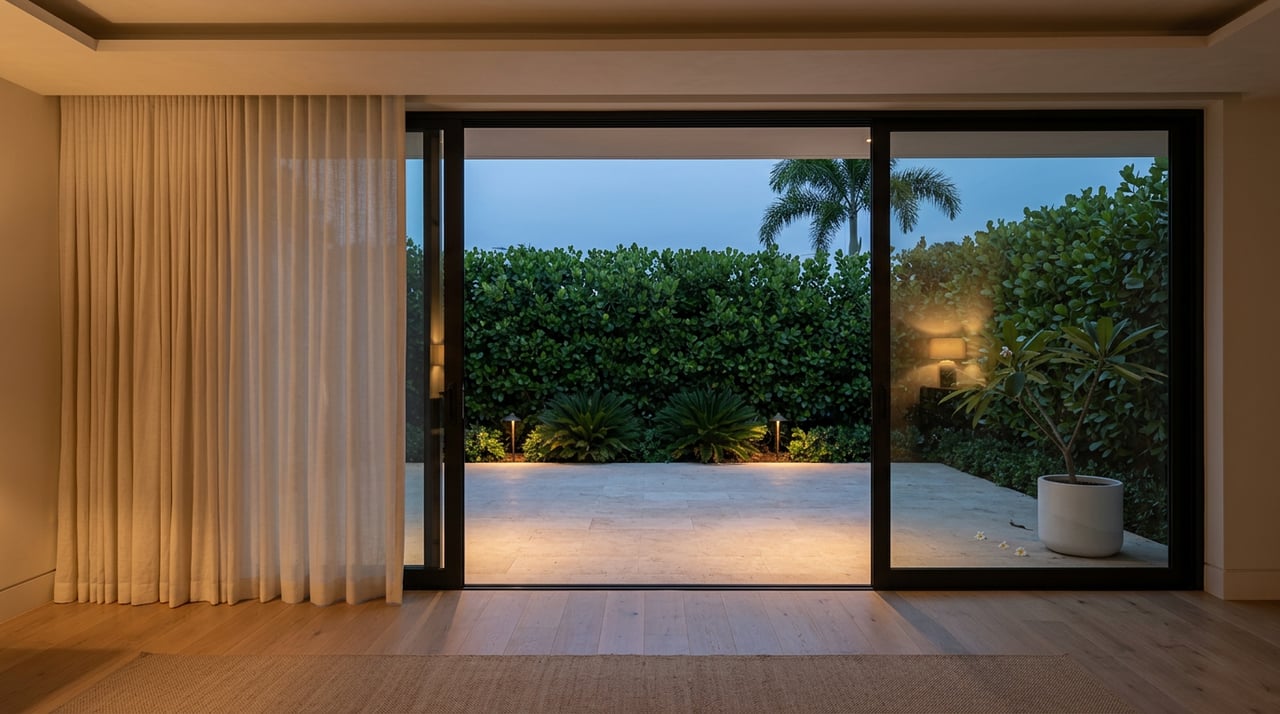
- Keeping no direct or indirect light visible from the beach, which means drawing curtains closed if indoor lighting is bright
- Using only long-wavelength bulbs, in yellow, amber, or red, for any outdoor fixture within 600 feet of the high tide line
- Keeping fixtures low and shielded so the light source itself can't be seen from the sand
None of this is framed as a courtesy. It is a standing city requirement tied to a decade-old ordinance, enforced the same way any other code violation would be.
Where the Season Actually Touches Your Day
For residents who use the public beach regularly, the practical geography is worth knowing. Anchor Park, at 340 South Ocean Boulevard, is home to the Ocean Rescue Division Headquarters, making it the natural anchor point, no pun intended, for beach conditions and safety questions. Annual beach parking permits are accepted at Sandoway Park, Anchor Park, Ingraham Park, Atlantic Dunes, and the Orange Grove and North lots, so a resident who wants to rotate their evening walk between spots has more than one option covered under a single permit.
One reminder that trips up newer residents more than any turtle rule: dogs are not permitted on Delray's municipal beach at any time of year, turtle season or not. It has nothing to do with nesting protection specifically, but it does mean the evening beach walk and the evening dog walk are two separate errands here.
The Real Timeline, Not the One on the Sign
Nesting season on paper runs through the end of October. In practice, the version of the season that a Dakota Delray resident can actually see with their own eyes is compressed into a much shorter stretch that is closing right now. The public turtle walks are already done for the year. The hatchling releases have less than three weeks left. What continues quietly through the fall is exactly that, quiet: nests still incubating under the sand, tended by a city crew that walks the beach before most residents are awake, with nothing to watch until next spring's tracks show up again.
If you have lived in Dakota Delray long enough to notice these small seasonal shifts, from the stakes on the sand to the dimmer porch lights a few blocks over, you already understand something about this neighborhood that doesn't show up on a listing sheet. Royal Palm Estates Realty pays attention to those same rhythms, because they're part of what makes daily life here different from anywhere else on the coast. If you're curious what else changes with the seasons in Dakota Delray, we're always glad to talk.